Group lead(s)


The group focuses on how THz methods probe low-energy vibrational, dielectric, and hydration dynamics in molecules and supramolecular structures. These fundamental insights underpin work across chemistry, biology, and soft-matter systems, and support early-stage developments in sensing and materials analysis.
The group is deliberately broad: we welcome physicists, chemists, biologists, engineers, clinicians, and industrial partners. This includes anyone working on fundamental problems in chemical or biological systems or facing practical measurement challenges where THz techniques might help.
Our goal is to connect people, share methods, and help the UK community make progress in both basic THz science and its chemical/biological applications. We support the community through targeted workshops and roadmapping.
Research areas include:
- Spectroscopy of hydration dynamics and low-energy molecular vibrations.
- Spectroscopy of explosives, narcotics, and hazardous chemicals
- Structural fingerprinting of biomolecules using THz absorption features
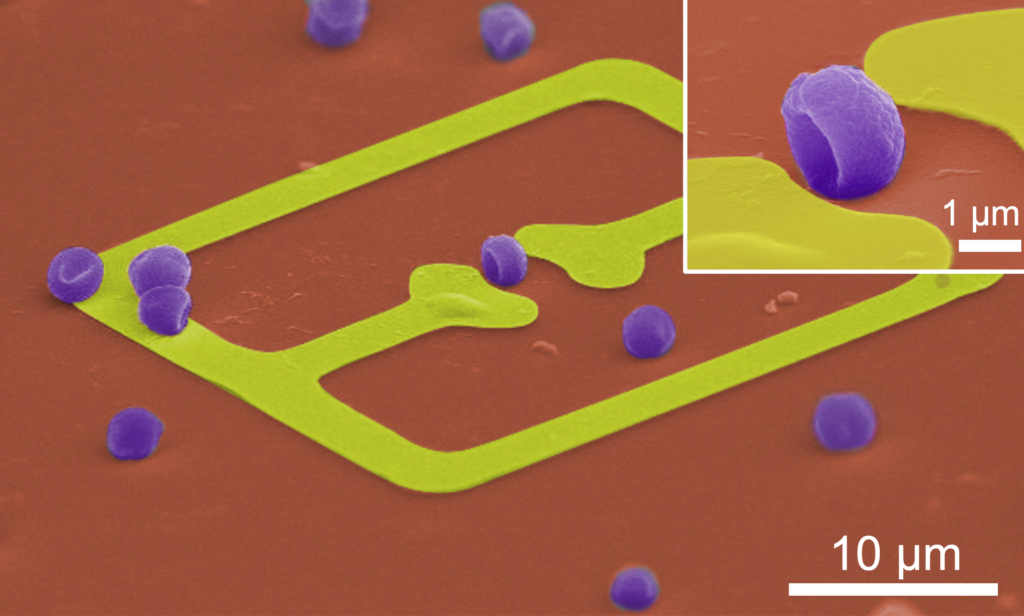
- Label-free detection of pathogens, viruses, and bacteria
- Study of hydrogen bonding and hydration shells in biological systems
- Monitoring chemical reactions
- Terahertz circular dichroism for chiral molecule analysis
- THz studies of conformational transitions in peptides and proteins
- Gas-phase rotational spectroscopy for trace gas analysis
- High-sensitivity THz metamaterial sensors
- Phase-change materials and liquid crystals
- MEMS and microfluidic devices
- Spectroscopy system development
- Spectroscopy of gases, liquids, and solutions
- Plasma studies and diagnostics
- Detection using atomic vapours
- High energy facilities (including FELs and synchrotrons)
Sign up
You can register your interest in joining SIG 4 when signing up as a Network member
Published on (Last updated on